Greenhouse robots are moving toward work that repeats in the same place, at the same height, and under the same rules. Picking, crop checks, and movement between rows are the areas to watch, but each task has a different technical barrier.
- Picking: the robot must find ripe fruit without damaging nearby stems.
- Crop checks: cameras need steady views through leaves, glare, and changing light.
- Transport: mobile platforms must move safely around workers, carts, and narrow rows.
Picking fruit without damaging the plant
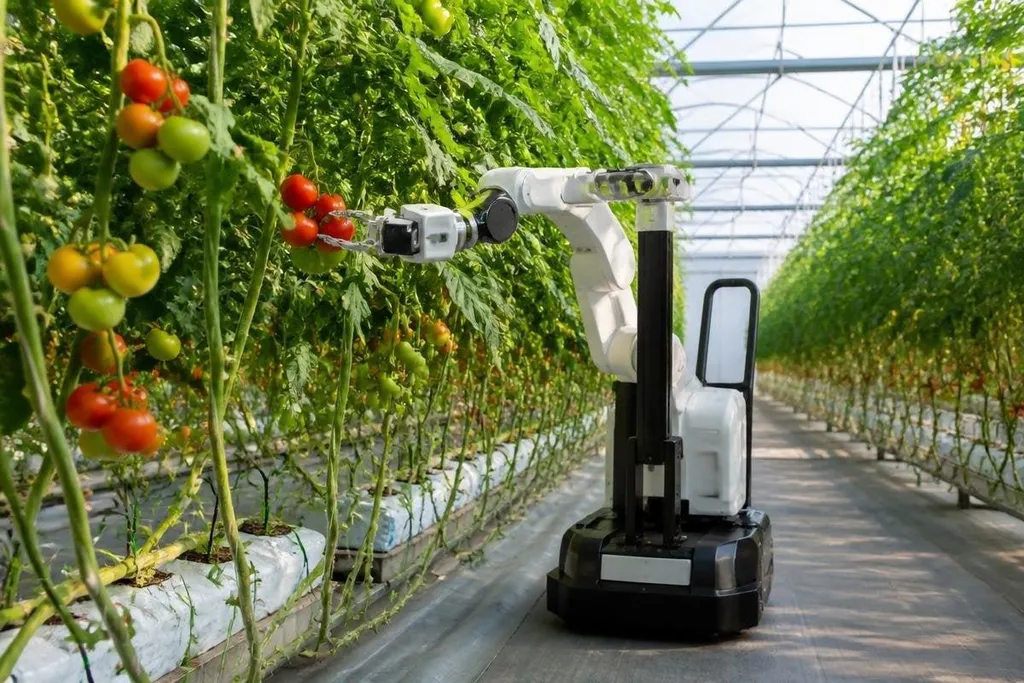
Fruit picking looks like a clear job for a robot because the task repeats. The hard part is that ripe fruit rarely hangs in a clear space. Leaves block the view, fruit can touch the support wire, and the stem may need to stay on the plant.
A picking robot needs cameras to find fruit, software to judge ripeness, and a gripper or cutter that can reach the target. The arm must also know when to stop. Too much force can bruise soft fruit or pull the plant from its support.
The useful measure is not a smooth video. It is the number of fruit the robot picks without damage, across different rows and lighting conditions. A system that works only on open fruit has a narrow job.
That makes crop choice important. Tomatoes, cucumbers, peppers, and berries each present different shapes, colors, stems, and leaf cover. A robot built for one crop may need new tools and software before it can work on another.
Scouting plants before problems spread
Scouting robots use cameras and other sensors to check plants as they move through the greenhouse. They can look for changes in color, leaf shape, plant height, or fruit count, then give the grower a map of where to inspect.
This work may reach farms before fully automatic picking. A camera does not need to touch a plant to spot a change, and a mobile platform can return to the same row for another scan.
The useful output is a clear location and a reason for the alert. The limit is lighting. Sunlight through glass can change during the day, while lamps can add glare or alter plant color. A system needs repeatable images before a grower can compare one scan with the next.
Lighting changes the evidence a greenhouse robot can produce. A greenhouse robotics report from Robot24 can place a scan beside the crop, light level, scan time, and human check that followed. That record matters before a grower trusts a robot to move materials through the same rows.
Moving crops, tools, and waste
Transport is less delicate than picking, but it still has practical value. A mobile robot can carry harvested crops, empty trays, tools, or plant waste between the growing area and a work station.
The robot needs a map of the greenhouse, sensors to detect people and objects, and a route that works when rows are partly blocked. A platform that drives well on an empty floor may stop often once carts, hoses, or workers enter the same space.
This task also gives growers a clear way to judge a purchase. Count the trips a worker makes in a shift, then check how many of those trips involve fixed routes and repeated loads. Those are better starting points than work that changes from plant to plant.
The limits that still decide the price
Greenhouses change. Plants grow into the path, wet floors affect traction, and crop rows may differ from one section to another. A robot needs a way to recover when its camera loses the plant or its route becomes blocked.
Human work also remains part of the system. Someone may need to refill the robot, clear a blocked path, check a damaged plant, or review crop alerts. A machine that cuts picking time but adds constant supervision may not reduce labor.
The maker should state what the robot has done, where it has done it, and what still needs a person. Without those details, a demonstration says little about daily use.
A buyer's check before a pilot
Use this list before asking for a trial:
- Name the task: choose picking, scouting, or transport rather than asking for a general robot.
- Set the crop: confirm the exact crop, row design, plant height, and support system.
- Measure the output: count picked fruit, inspected plants, or completed trips.
- Test poor conditions: include glare, wet floors, blocked rows, and workers nearby.
- Count supervision: record how often a person must stop, guide, or reset the robot.
- Price the whole job: include charging, service, new tools, software, and staff time.
The first useful greenhouse robot may be the one with the smallest job. A machine that handles one repeatable task through a full crop cycle is easier to measure than a system claiming to run the whole greenhouse.